When Do Babies Need Hearing Protection? A Parent's Guide to Noise Safety
Loud environments can harm your baby's developing hearing faster than you think. This guide covers what noise levels are unsafe, when earmuffs are essential, and what to look for in certified baby hearing protection.
Why Baby Hearing Protection Matters
Babies have more sensitive hearing than adults. Their ear canals are shorter and narrower, which amplifies sound. The CDC notes that prolonged exposure to sounds above 70 dB can damage hearing over time—and many everyday environments exceed that threshold.
Infants can't tell you when noise hurts. They may cry, flinch, or shut down, but subtle damage builds silently. That's why understanding when to shield your child's ears is critical.
Noise Levels Parents Should Know
| Environment | Typical Level | Safe for Baby? |
|---|---|---|
| Quiet home | 40–50 dB | Yes |
| Busy restaurant | 70–80 dB | Risky, prolonged |
| Sporting event | 90–105 dB | No |
| Fireworks display | 140+ dB | Dangerous |
| Concert or festival | 100–120 dB | Dangerous |
Any environment above 85 dB warrants hearing protection for infants. Short bursts above 100 dB can cause immediate harm.
When to Use Baby Earmuffs
- Festivals and concerts – even outdoor events carry intense bass and crowd noise
- Fireworks displays – sudden impulse sounds are the top risk for acute damage
- Motor sports – car and motorcycle races produce sustained high-decibel noise
- Air travel – cabin noise hovers around 80–85 dB; earmuffs also help babies sleep
- Busy restaurants or malls – overstimulation-prone toddlers benefit from reduced input
- Parades and fairs – unexpected sirens, horns, and crowd surges
What to Look for in Baby Hearing Protection
Certification
Only choose earmuffs tested and certified under recognized standards. CE marking and ANSI certification confirm the product meets safety requirements for noise reduction.
No Hard Parts
Babies move unpredictably and sleep in earmuffs. Soft padding and flexible headbands prevent pressure points and injury.
Adjustable Fit
Infants grow fast. A hook-and-loop closure system lets you resize the headband as your child develops, extending usable life.
Proper Noise Reduction Rating
Look for a verified SNR or NRR. Too much reduction isolates the child; too little defeats the purpose. Around 23 dB SNR is a practical sweet spot for most loud-outing scenarios.
A Certified Option: Alpine Muffy Baby
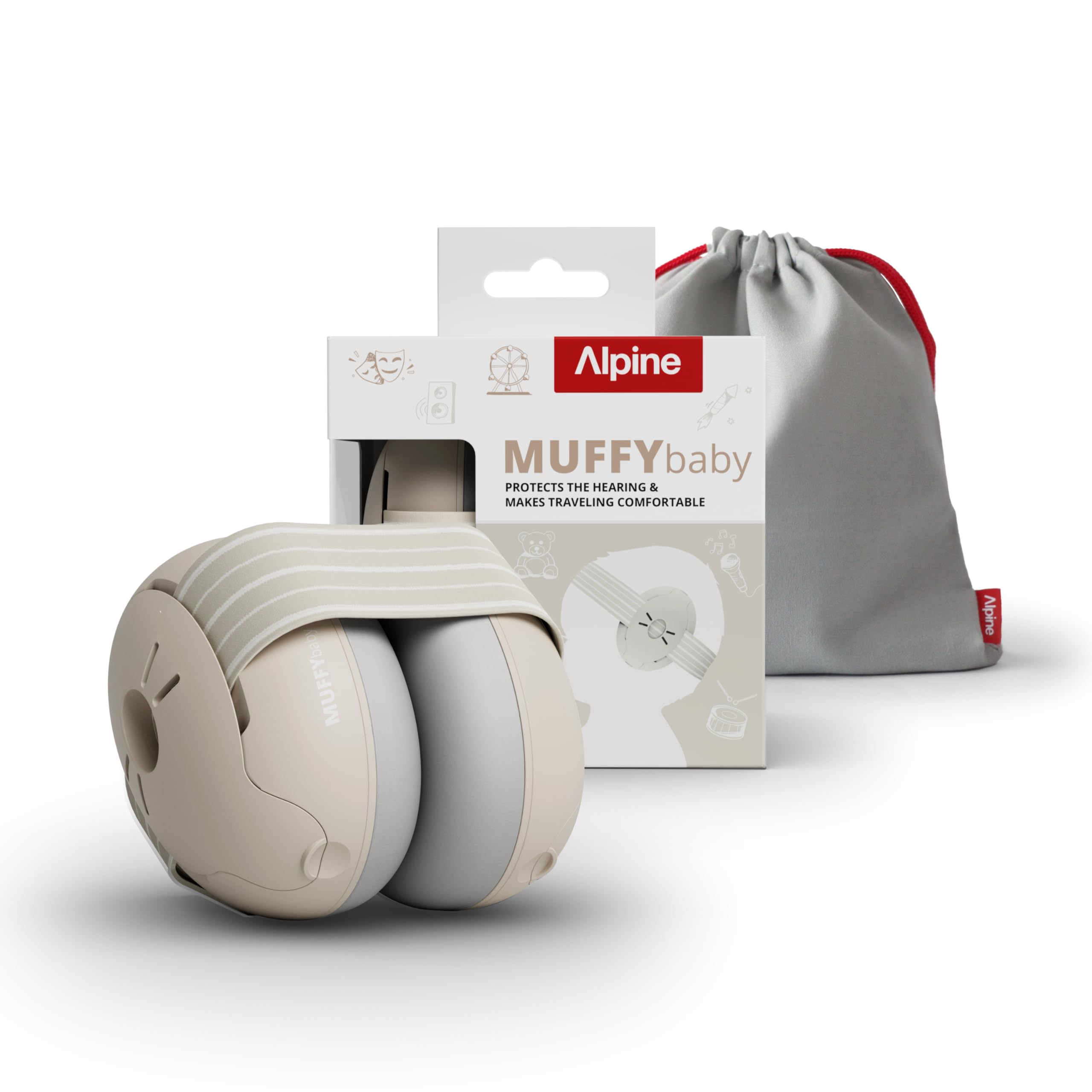
The Alpine Muffy Baby Ear Protection for Babies and Toddlers up to 36 Months holds both CE and ANSI certification—rare dual compliance for this category. It delivers a tested 23 dB SNR, uses multiple layers of noise-reducing foam inside soft PVC and PU padding, and avoids hard parts entirely.
The anti-slip polyester headband adjusts via hook-and-loop closure to fit head circumferences between 15.4 and 19.7 inches, covering infants through roughly age four. It also comes with a carrying pouch for travel.
Designed in the Netherlands with 25 years of hearing-protection R&D behind it, the Alpine Muffy Baby earned the MummyPage's 'As Loved by Mums' seal and rates 4.4 out of 5 across thousands of parent reviews. At a mid-range price point, it balances certified performance with long-term adjustability.
Verdict
Certified baby hearing protection is a small investment against irreversible damage. The Alpine Muffy Baby stands out for its dual CE/ANSI certification, adjustable soft-band design, and proven 23 dB noise reduction—making it a reliable choice for parents who attend loud events or travel frequently with an infant.
Who It Suits
Parents of babies and toddlers (up to 48 months) who attend festivals, fireworks, sporting events, or fly often. Also ideal for noise-sensitive or overstimulation-prone children in busy public spaces.
Who Should Skip
Families who rarely encounter environments above 85 dB. If your outings are mostly quiet parks and home settings, earmuffs may sit unused.
Check latest price on Amazon →
Related Buying Guides
- WONDERKID vs AUSTOR Self-Closing Outlet Covers: Which Slide Mechanism Is Smoother for Daily Use?
- Best Baby Shower Gift: Carrier Bib Sets That New Parents Actually Need
- Backseat Organizer with Tray Table vs. Without: Which Setup Actually Works for Daily School Runs?
- Baby Won't Keep Earmuffs On? Troubleshooting Infant Hearing Protection
- Beginner's Guide to Baby Diaper Cream: What Every New Parent Needs to Know
- How to Build a Budget Travel System with a Car-Seat-Compatible Stroller