Seated Walker vs Sit-to-Stand: Safety Features That Matter for First-Time Walkers
When your baby starts exploring mobility, safety becomes the top priority. This comparison breaks down the protective features of seated walkers versus sit-to-stand designs so you can choose the safest option for your little one's first steps.
Your baby's first attempts at walking are thrilling milestones, but they also bring legitimate safety concerns. Choosing between a seated walker and a sit-to-stand model isn't just about features or entertainment value—it's about which design better protects your child during this vulnerable developmental stage.
Understanding the Two Core Safety Philosophies
Seated walkers and sit-to-stand models approach baby safety from fundamentally different angles. Seated designs prioritize containment and stability through a supportive seat and wide base, while sit-to-stand models focus on natural balance development and gradual progression from sitting to cruising.
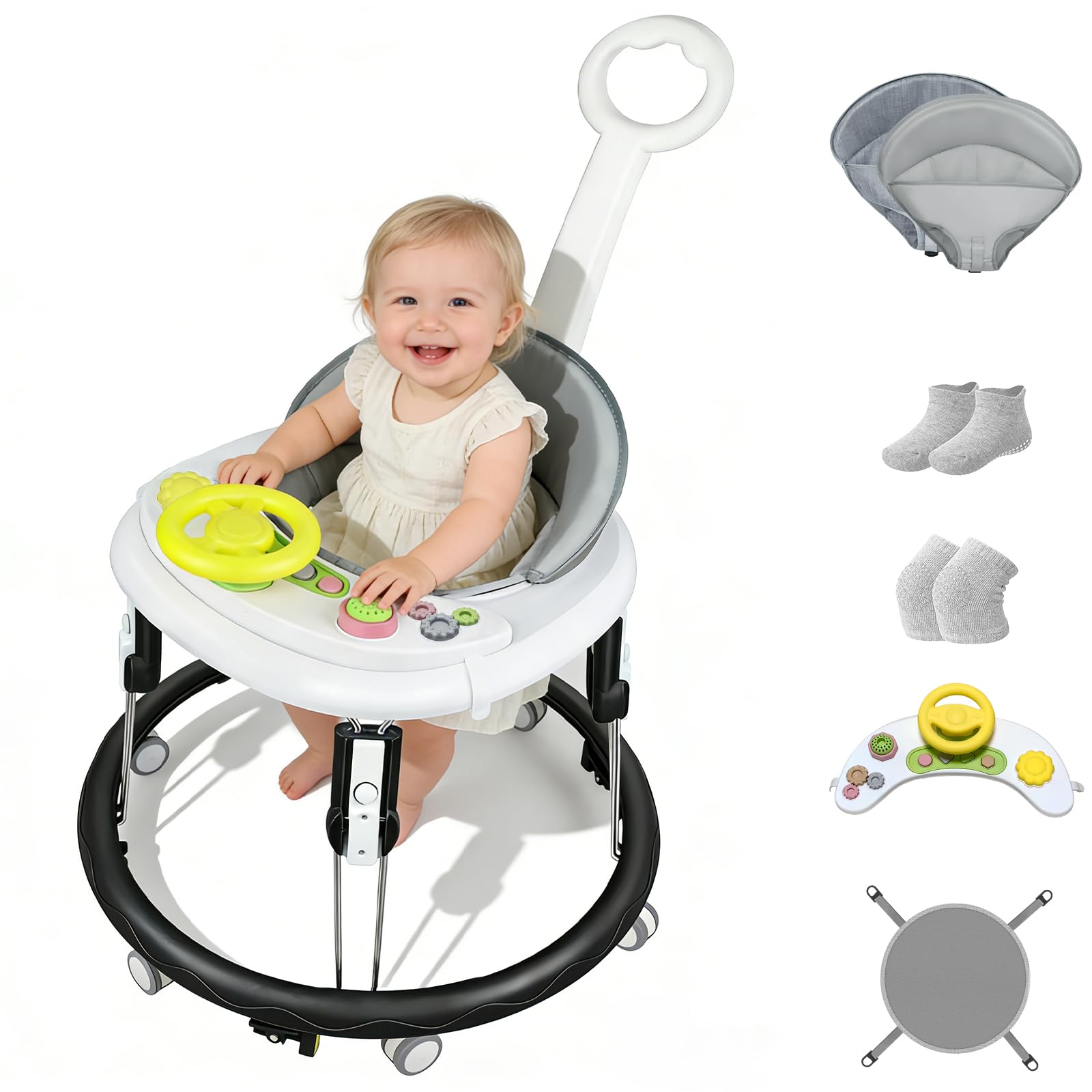
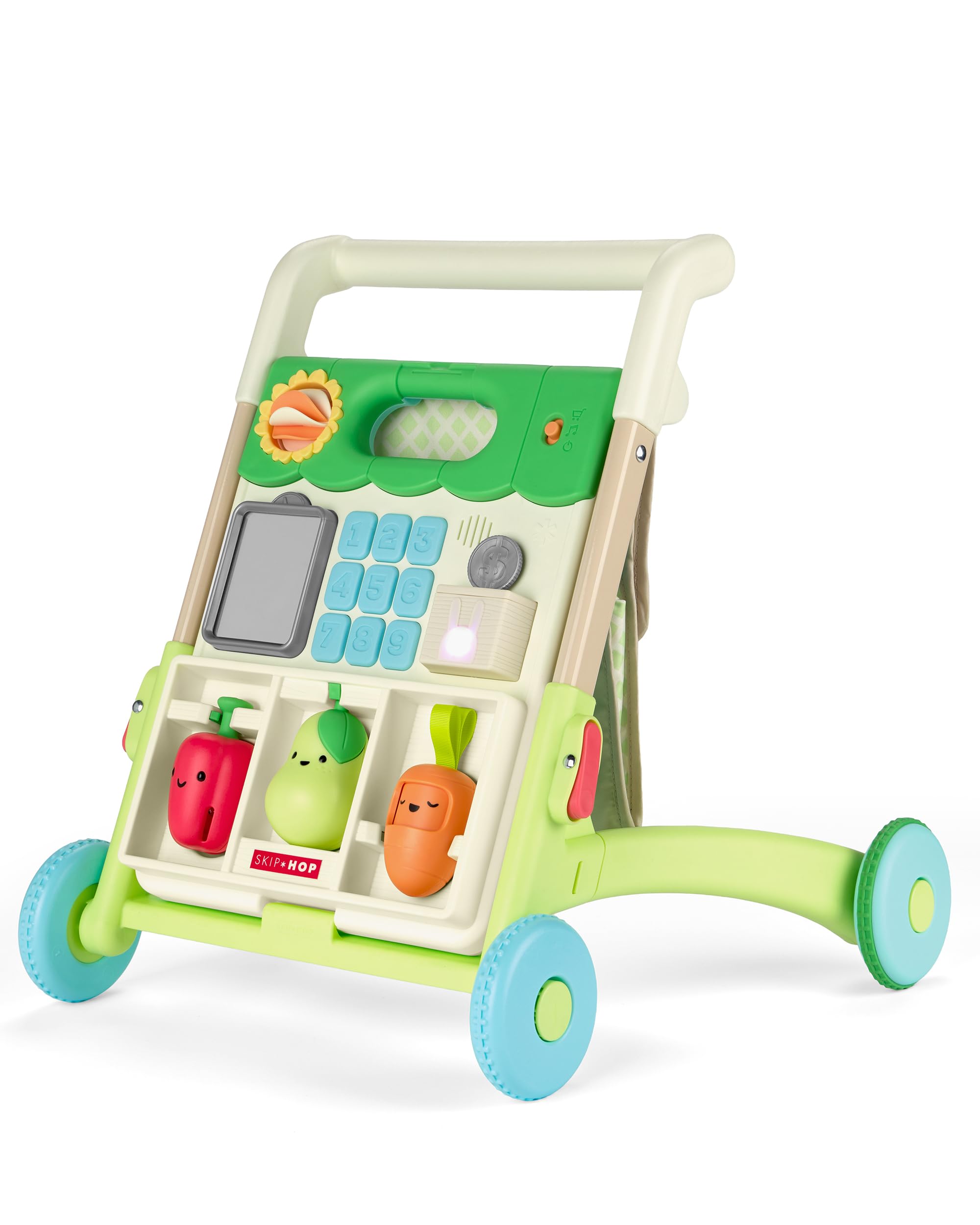
The Foldable Baby Walker with Wheels 360, 5 in 1 Toddler Activity Walkers exemplifies the seated approach with its comprehensive safety package, while the Skip Hop Baby Walker 5-in-1 Sit to Stand Convertible Light Up Walker represents the progressive sit-to-stand philosophy.
Critical Safety Features in Seated Walkers
The Foldable Baby Walker with Wheels 360, 5 in 1 Toddler Activity Walkers incorporates several protective elements specifically designed for babies aged 8-24 months who aren't yet walking independently:
Anti-Rollover Protection
This seated walker uses an anti-rollover chassis design with a large bottom and small top, creating a stable center of gravity. The circular base allows unrestricted sliding in any direction while maintaining balance, which helps prevent the tipping incidents that worry many parents.
Four-Point Brake System
Perhaps the most significant safety feature is the four parking brakes. When engaged, they transform the mobile walker into a stationary activity center—ideal for feeding time or when you need your baby secured in one spot.
Enhanced Cushioning
The full wrap-around cushion with increased backrest height protects your baby's spine and reduces fall risk. The anti-fall design on both sides features smaller openings that effectively prevent babies from slipping through.
Sit-to-Stand Safety Considerations
The Skip Hop Baby Walker 5-in-1 Sit to Stand Convertible Light Up Walker takes a different safety approach suited for babies ready to develop standing and cruising skills from 6 months onward:
Speed Control and Non-Skid Wheels
Instead of brakes, this model uses a speed control switch combined with non-skid rear wheels. This allows you to moderate how fast the walker moves as your baby pushes it, preventing runaway situations while still encouraging natural walking motion.
Adjustable Support Heights
Three handle height settings (18.3", 20.1", and 21.9") let the walker grow with your child. Proper handle height is crucial for maintaining good posture and preventing falls caused by reaching too high or leaning too low.
Progressive Mobility Development
By transitioning through five modes from sitting to standing, babies build balance and motor skills gradually rather than being placed directly into a mobile walker seat before they're developmentally ready.
Safety Feature Comparison
| Safety Feature | Seated Walker | Sit-to-Stand |
|---|---|---|
| Tip-over prevention | Anti-rollover chassis with wide circular base | Non-skid rear wheels for stability |
| Speed management | Four parking brakes for complete stops | Adjustable speed control switch |
| Body support | Full wrap-around cushion with high backrest | Progressive support through developmental stages |
| Height adjustment | Five height positions (17.7"-20") | Three handle heights (18.3"-21.9") |
| Fall prevention | Reduced hole size, anti-fall side design | Stable base for push support |
Which Safety Approach Fits Your Baby?
The seated walker's containment model works best for babies who aren't yet pulling up independently or who need a secure space to play while you handle other tasks. The brake system and anti-rollover design provide maximum control over mobility.
The sit-to-stand model suits babies who are already showing signs of readiness to stand and cruise. Its speed control and progressive design encourage natural balance development while still providing safety guardrails.
The Balanced Verdict
Both designs offer legitimate safety features—they simply protect babies at different developmental moments. The seated walker prioritizes containment and stationary security, making it ideal for younger babies or those needing more support. The sit-to-stand model emphasizes controlled mobility and natural progression, better suited for babies ready to develop standing skills.
Neither design is inherently safer; effectiveness depends entirely on matching the safety features to your baby's current abilities and your home environment.
Who Should Choose a Seated Walker
- Parents of babies not yet pulling up to stand independently
- Families who need a stationary activity center with mobility options
- Those with larger floor spaces where anti-rollover design matters most
- Parents who want complete stop-and-go control via brakes
- Caregivers seeking maximum containment during busy household moments
Who Should Choose a Sit-to-Stand Walker
- Parents of babies already pulling up on furniture
- Families focused on natural walking skill development
- Those wanting one product that grows through multiple stages
- Parents who prefer gradual mobility progression over containment
- Households where the walker doubles as imaginative play equipment
Beyond the Walker: Essential Safety Practices
Regardless of which design you choose, active supervision remains non-negotiable. Keep walkers away from stairs, pools, and uneven surfaces. Use safety gates to block hazardous areas and remove obstacles from walker paths.
The safest walker is the one that matches your baby's developmental stage and your family's supervision capacity. Understanding the distinct safety philosophies helps you make that match confidently.
Related Buying Guides
- WONDERKID vs AUSTOR Self-Closing Outlet Covers: Which Slide Mechanism Is Smoother for Daily Use?
- Best Baby Shower Gift: Carrier Bib Sets That New Parents Actually Need
- Backseat Organizer with Tray Table vs. Without: Which Setup Actually Works for Daily School Runs?
- Baby Won't Keep Earmuffs On? Troubleshooting Infant Hearing Protection
- Beginner's Guide to Baby Diaper Cream: What Every New Parent Needs to Know
- How to Build a Budget Travel System with a Car-Seat-Compatible Stroller