You bought the NumNum Baby Spoons Set expecting smooth sailing through baby-led weaning, but now your six-month-old seems more confused than confident. Food keeps sliding off, your baby prefers throwing the spoons over using them, or the grip just doesn't seem to click. Let's troubleshoot the most common issues and get mealtime working again.
Why Food Keeps Sliding Off the Spoon
The most frequent complaint involves food simply not staying put. This usually happens when parents load too much onto the spoon or choose foods that are too runny for the grip channels to hold.
The open-channel design of the NumNum Baby Spoons Set works by gripping soft solids between the ridges. Purees that are too thin will slip right through, while thick mashes and soft finger foods stay secure. Try thicker oatmeal, mashed avocado, or yogurt instead of watery purees.
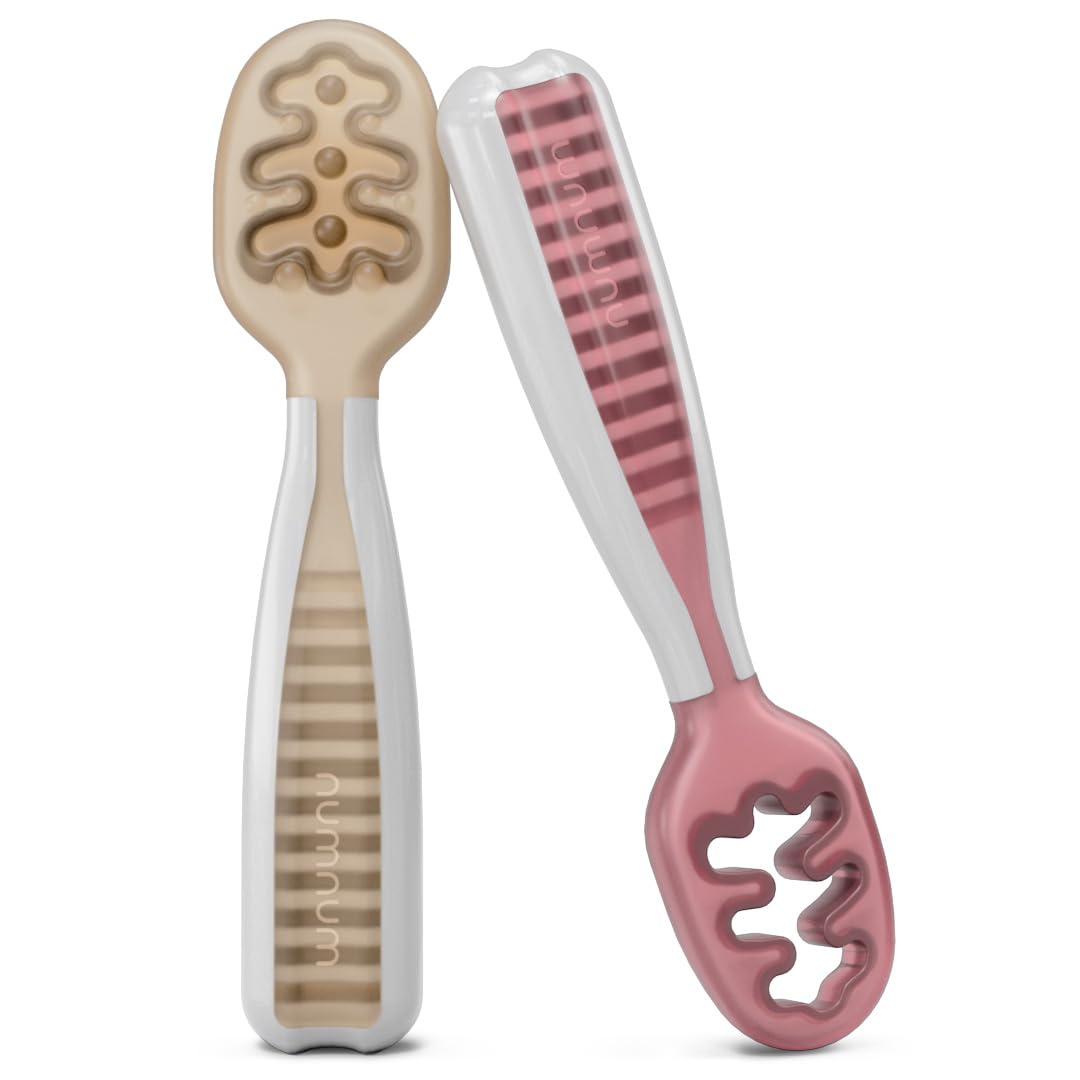
Also check your loading technique. A small smear across the ridges works better than piling food on top. Let your baby dip the spoon themselves once they get the hang of it.
Your Baby Won't Hold the Spoon Correctly
Babies between six and eighteen months are still developing their grasp, and the thick contoured handle is designed so there's no wrong way to hold it. If your baby keeps dropping the spoon or holding it awkwardly, they might need more practice time without pressure.
Start by letting them explore the spoon as a teether when not eating. The food-grade silicone is safe for gumming, and this builds familiarity. During meals, hand the spoon to your baby already loaded instead of expecting them to scoop. The pre-spoon design eliminates the need for wrist rotation, a skill that doesn't develop until around age two.
Common Problems and Quick Fixes
- Spoon feels too stiff: Silicone firmness is intentional to prevent excessive flexibility that makes scooping harder. Let it warm up in your hands before feeding.
- Baby prefers finger feeding: Totally normal. Use the spoon alongside finger foods rather than replacing them entirely during the transition period.
- Frustration during meals: Keep sessions short. Five to ten minutes of practice is enough for beginners.
- Spoon smells after washing: Dishwasher-safe doesn't mean odor-proof with all foods. Hand wash with baking soda paste for stubborn smells.
- Food gets stuck in ridges: Rinse immediately after meals. Dried food lodges deeper into the channels.
When the Spoon Might Not Be the Right Fit
Sometimes the issue isn't how you're using the spoon but whether it matches your baby's current stage. The flat pre-spoon works best for early purees and first attempts at self-feeding. If your child is already past twelve months and confidently using a pincer grasp, they might be ready to graduate to traditional utensils.
The NumNum Baby Spoons Set bridges the gap between parent-fed and independent eating, but it's a teaching tool, not a permanent solution. Watch for signs your baby is ready to move on, like consistently getting food to their mouth or showing interest in grown-up spoons.
The Bottom Line
Most feeding struggles with these spoons come down to food consistency, unrealistic expectations about developmental readiness, or skipping the exploration phase. The design eliminates many traditional self-feeding problems, but it still requires patience and the right approach.
Perfect For
Parents starting baby-led weaning between six and eighteen months who need a mess-reducing transition tool and babies who struggle with traditional spoon scooping and balancing.
Skip If
Your child is already confidently using standard utensils, you prefer exclusively parent-led feeding without self-feeding practice, or your baby is under six months and not yet ready for solids.