Muslin vs Organic Cotton Burp Cloths: Which Fabric Works Best for Your Baby?
Choosing between muslin and organic cotton burp cloths can feel overwhelming for new parents. Both fabrics promise softness and absorbency, but they deliver these benefits in distinct ways. This comparison breaks down the key differences to help you find the right match for your baby's needs.
Understanding the Fabric Debate
When stocking your nursery essentials, the fabric choice for burp cloths matters more than many parents realize. Muslin and organic cotton each bring unique characteristics to the table, from their construction methods to how they perform after multiple washes. The right choice depends on your priorities around absorbency, texture, environmental considerations, and daily practicality.
Head-to-Head Comparison
| Feature | Maliton Muslin Burp Cloths | Burt's Bees Baby Organic Cotton Burp Cloths |
|---|---|---|
| Material | 100% cotton muslin, 6 layers | GOTS-certified organic cotton, 2-ply |
| Size | 20 x 10 inches | 17 x 11.75 inches |
| Pack Count | 6 pack | 5 pack |
| Fabric Construction | Multilayer muslin weave | 1x1 rib knit, combed ring-spun |
| Design Elements | Zoo pattern prints | Yarn-dyed stripes, hand-painted prints |
| Special Features | Extra breathability, multi-purpose use | 3-panel layout, organic certification |
The Muslin Advantage
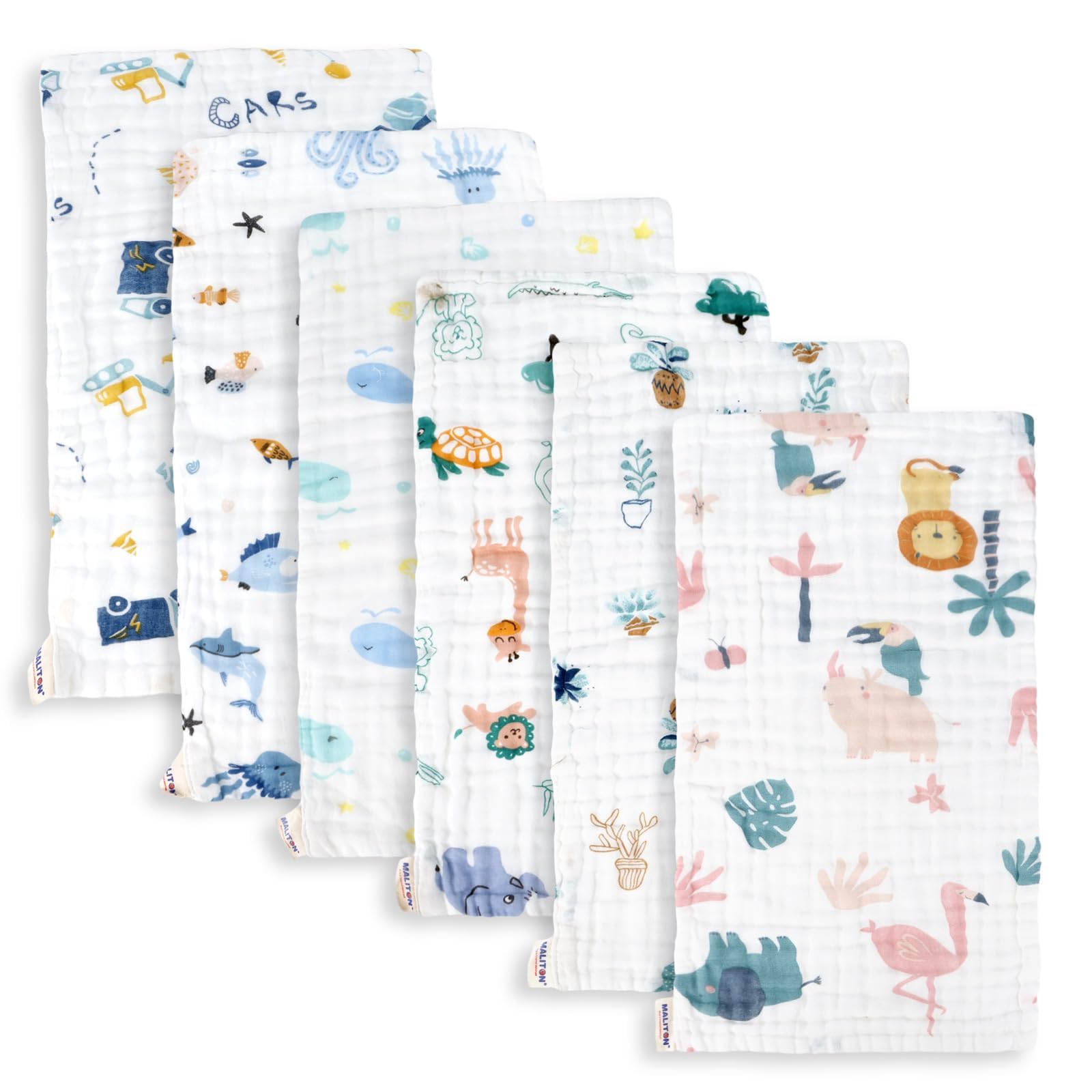
The Maliton Muslin Baby Burp Cloths feature six layers of pure cotton muslin that create exceptional absorbency. The multilayer construction catches liquid quickly while maintaining a lightweight, breathable feel against your baby's skin. At 20 x 10 inches, these cloths offer generous length for shoulder coverage.
Muslin's open weave becomes softer with every wash, and the six-pack quantity means you'll always have a clean cloth ready. The zoo pattern adds visual interest, and the fabric's versatility extends beyond burping to work as washcloths or gentle face wipes.
The Organic Cotton Alternative
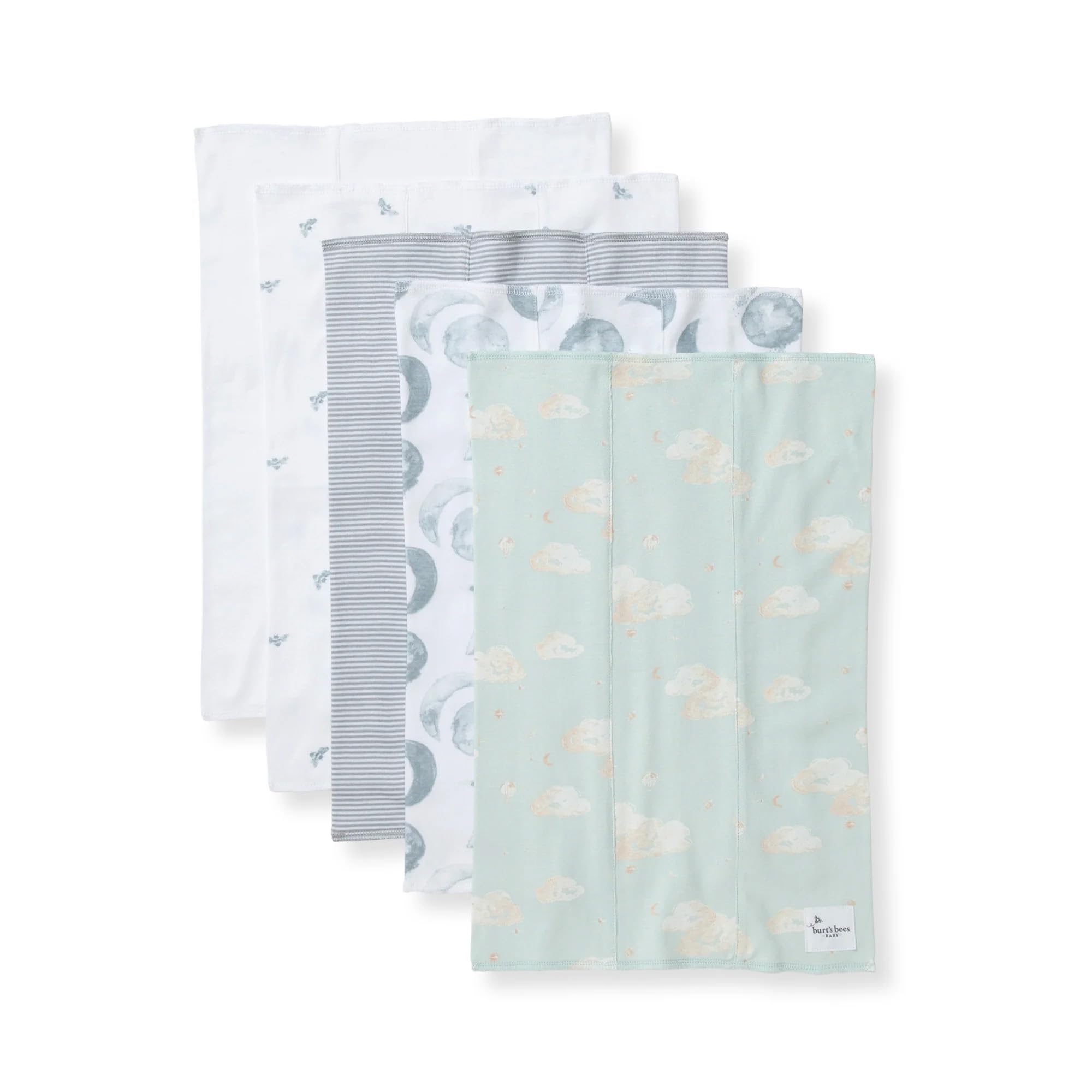
The Burt's Bees Baby 100% Organic Cotton Burp Cloths bring GOTS-certified organic credentials and a unique rib knit structure. The combed ring-spun fabric delivers immediate softness without the break-in period muslin requires. The 1x1 rib knit and three-panel layout work together for reliable moisture control.
These cloths measure 17 x 11.75 inches, offering more width than length. The yarn-dyed stripes maintain their color through repeated washing, and the thicker two-ply construction provides substantial absorbency without bulk. Parents who prioritize organic materials and structured durability will appreciate this approach.
Key Performance Differences
- Absorbency method: Muslin uses multiple thin layers for quick liquid capture; organic cotton relies on thicker ply and rib knit structure
- Texture evolution: Muslin softens progressively with washing; organic cotton starts soft and maintains consistency
- Dimensions: Muslin offers extra length for shoulder coverage; organic cotton provides wider surface area
- Environmental angle: Organic cotton carries GOTS certification; muslin focuses on pure cotton without organic claim
- Durability indicators: Both feature no-pill construction, but organic cotton's combed ring-spun yarn shows reinforced strength
The Verdict
Both fabric types excel at their core function of protecting your clothes from baby messes. Muslin wins on breathability, layer count, and the gradual softening that many parents love. Organic cotton takes the lead with immediate softness, structured absorbency design, and certified organic production. Neither choice is wrong—your decision comes down to whether you value lightweight versatility or plush, eco-certified thickness.
Best For Muslin Fans
Parents who appreciate fabrics that become treasured over time, need maximum breathability in warm climates, want the flexibility of using burp cloths as multi-purpose baby care items, or prefer longer dimensions for full shoulder protection will find muslin delivers exactly what they need.
Best For Organic Cotton Advocates
Families prioritizing certified organic materials, those who want immediate plush softness without a break-in period, parents seeking wider coverage area, or anyone drawn to classic stripe aesthetics and structured rib knit texture should lean toward organic cotton.
Consider Alternatives If
You need waterproof backing for heavy spitters, prefer synthetic quick-dry fabrics for frequent washing cycles, require very specific pattern designs beyond stripes or zoo prints, or want burp cloths that double as nursing covers with added size.
Related Buying Guides
- Backseat Organizer With a Foldable Tray vs. Without: SURDOCA and Oneyus Go Head-to-Head
- Smopgn Portable Bottle Warmer Review: Travel-Friendly Milk Warming On the Go
- Vaunn Medical Foot Step Stool Review: A Sturdy Non-Slip Step Stool for Busy Families
- Best Lightweight Infant Car Seat Travel System: Evenflo Pivot NXT Editions Compared
- WONDERKID vs AUSTOR Self-Closing Outlet Covers: Which Slide Mechanism Is Smoother for Daily Use?
- Best Baby Shower Gift: Carrier Bib Sets That New Parents Actually Need