How to Transition Your Baby From Bottle to Straw Cup in 5 Simple Steps
Moving from bottle to straw cup doesn't have to be a battle. Here's a practical 5-step approach and the one cup designed to make the whole process smoother.
Why the Bottle-to-Straw-Cup Transition Matters
Prolonged bottle use can affect oral development and delay independent drinking skills. Pediatric professionals generally recommend introducing a straw cup around 6 months, with the goal of phasing out bottles by 12–18 months. But many parents hit a wall: baby refuses the straw, spills go everywhere, and the lid pops off at the worst moment.
The good news? With the right approach—and the right cup—this transition can be surprisingly smooth.
5 Steps to Successfully Transition Your Baby to a Straw Cup
Step 1: Start With a Familiar Liquid
Fill the cup with breastmilk or formula your baby already loves. A new drinking method plus a new liquid is too much change at once.
Step 2: Model the Motion
Babies learn by watching. Drink from a straw yourself, exaggerating the sucking motion. Then offer the cup while your baby is seated and curious—not cranky or overtired.
Step 3>Choose a Cup Built for Beginners
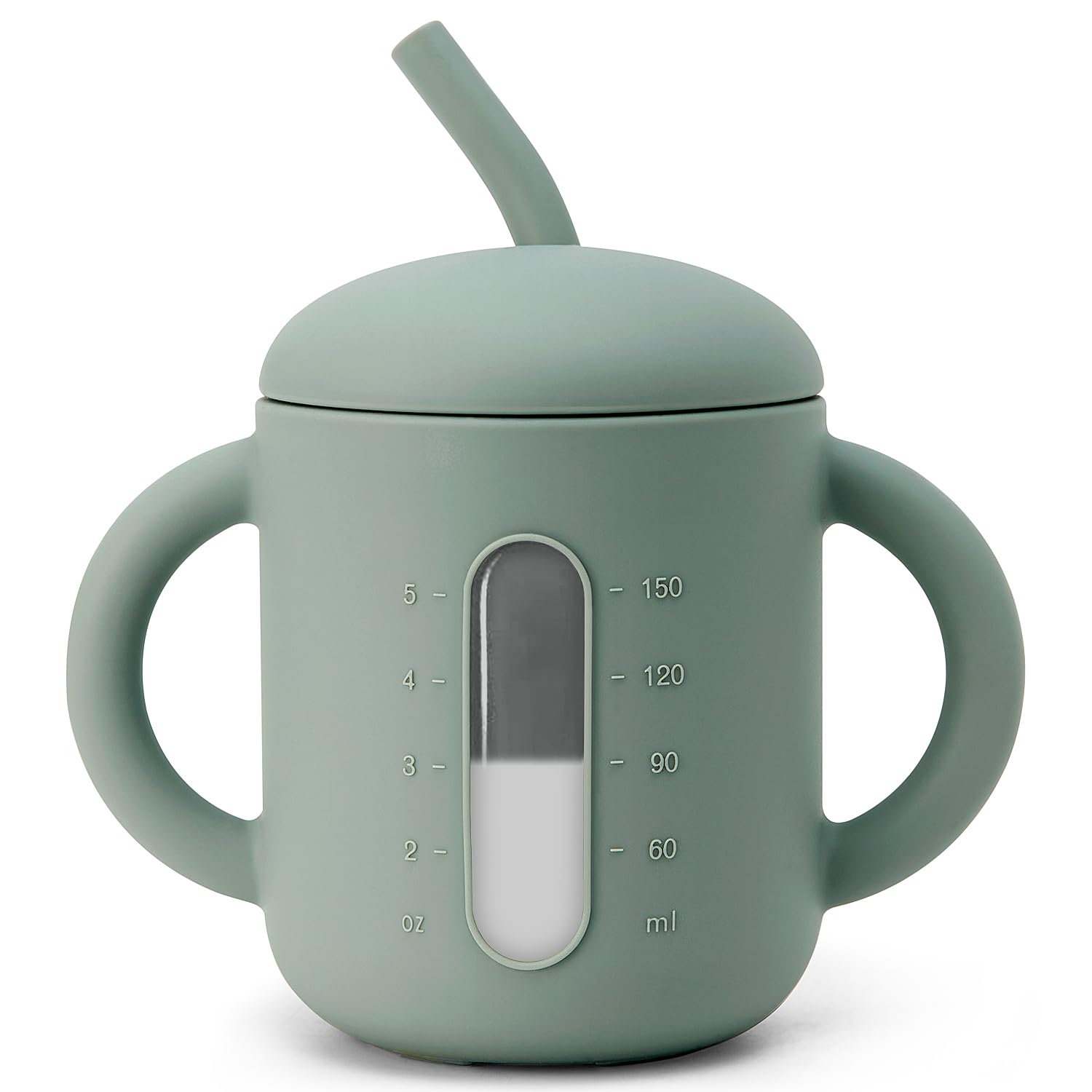
A first straw cup needs to be easy to suck from, hard to spill, and simple for you to monitor. The SAMiGO Silicone Baby Straw Sippy Cup for 6-12 Months, Toddlers 1-3, 6 oz is designed specifically for this stage. It features a firmer lid that stays in place when tossed or squeezed, a clear window so you can see how much your baby has consumed without opening it, and accurate ounce markings to track intake.
Step 4: Offer It at One Meal a Day
Consistency beats volume. Replace the bottle at a single feeding—lunch works well—then gradually expand. Don't rush; some babies need two to three weeks to get comfortable.
Step 5: Praise Every Attempt
Even a single sip is progress. Celebrate it. Positive reinforcement builds confidence faster than correction.
What to Look for in a First Straw Cup
| Feature | Why It Matters |
|---|---|
| Leak-resistant lid | Prevents messes when cup is dropped or squeezed |
| Clear window + oz markings | Track intake without opening the cup |
| Food-grade silicone | Safe for chewing and sucking; free of BPA, PVC, phthalates |
| Thicker, sturdier build | Survives drops and tossing; lasts longer |
| Dishwasher safe | Saves time on cleanup after every use |
The SAMiGO Silicone Baby Straw Sippy Cup for 6-12 Months, Toddlers 1-3, 6 oz checks every box above. It weighs roughly 20% more than average silicone cups, which means a sturdier feel and better durability. It's also dishwasher and microwave safe, so cleanup fits into a busy routine.
The Verdict
Transitioning from bottle to straw cup is less about willpower and more about having the right tool and a patient routine. The SAMiGO Silicone Baby Straw Sippy Cup for 6-12 Months, Toddlers 1-3, 6 oz earns its place as a transition-day-one cup thanks to its leak-resistant lid, clear intake window, and heavier-duty silicone build. At a budget-friendly price point, it's a low-risk way to start the switch.
Who It Suits
- Parents of babies 6–12 months beginning the bottle-to-cup transition
- Families who want to track how much their baby drinks without constant opening
- Anyone tired of flimsy lids that pop off mid-sip
Who Should Skip
- Parents looking for a hard-spout cup rather than a straw design
- Families needing a cup larger than 6 oz for older toddlers
Related Buying Guides
- WONDERKID vs AUSTOR Self-Closing Outlet Covers: Which Slide Mechanism Is Smoother for Daily Use?
- Best Baby Shower Gift: Carrier Bib Sets That New Parents Actually Need
- Backseat Organizer with Tray Table vs. Without: Which Setup Actually Works for Daily School Runs?
- Baby Won't Keep Earmuffs On? Troubleshooting Infant Hearing Protection
- Beginner's Guide to Baby Diaper Cream: What Every New Parent Needs to Know
- How to Build a Budget Travel System with a Car-Seat-Compatible Stroller