How Baby Fruit Feeders Really Work: Design and Safety Features Explained
Baby fruit feeders let little ones safely explore solid foods through controlled teats. Understanding their stage-based design, material safety, and dual teething function helps parents choose the right feeder for baby-led weaning.
Baby fruit feeders bridge the gap between purees and finger foods, giving babies a safe way to self-feed while reducing choking risk. These silicone tools have become popular for baby-led weaning, but how do they actually work? Let's break down the design features that make them both functional and safe.
The Core Design: How Silicone Teats Control Food Flow
Unlike traditional mesh feeders, modern silicone fruit feeders use a perforated teat system. Food sits inside a chamber, and babies gnaw or suck on the silicone surface. Small perforations release manageable amounts of puree, fruit chunks, or vegetables without letting large pieces through.
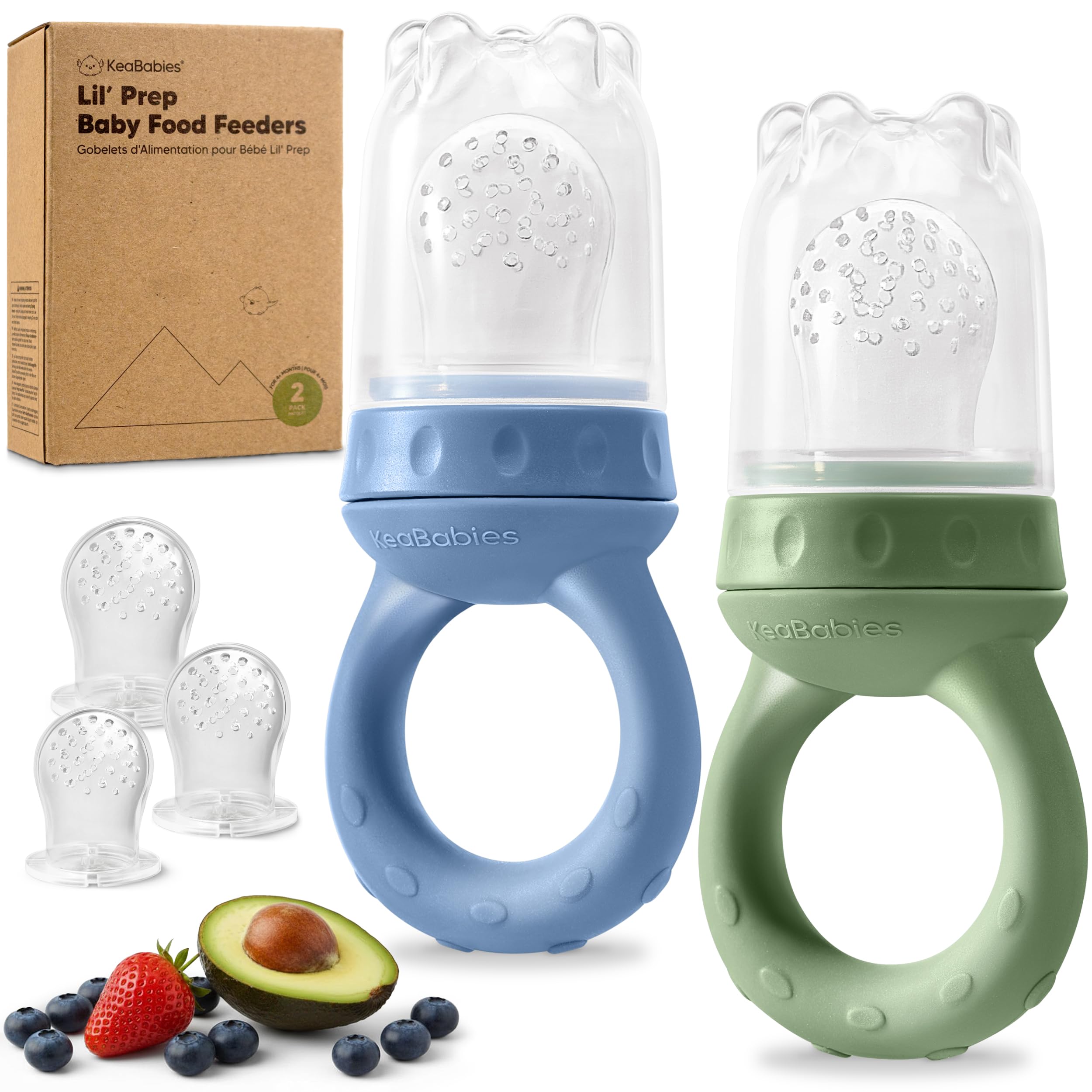
The KeaBabies Baby Fruit Feeder 2pk demonstrates this approach with a four-part construction. The BPA-free silicone teat screws onto a handle made from food-grade polypropylene, creating a simple assembly that's easy to fill and clean.
Stage-Based Sizing: Growing With Your Baby
Not all fruit feeders are one-size-fits-all. The most effective designs include multiple teat sizes to match developmental stages:
| Stage | Age Range | Purpose |
|---|---|---|
| Starter | 4–6 months | First tastes and thin purees |
| Explorer | 6–12 months | Thicker textures and soft fruits |
| Pro | 8+ months | Chunkier foods and frozen treats |
This progression matters because younger babies need gentler teats and smaller perforations, while older babies benefit from firmer silicone that encourages chewing practice.
The Dual-Purpose Teething Function
Many fruit feeders double as teething relief tools. Fill them with frozen breast milk, chilled fruit, or ice to create a soothing popsicle. The cold silicone numbs sore gums while the familiar sucking motion comforts fussy babies.
This dual function is particularly useful during the 6–12 month period when molars emerge and babies are simultaneously learning to eat solids.
Material Safety: What to Look For
Quality fruit feeders use BPA-free, phthalate-free silicone that's dishwasher-safe and sterilizer-safe. The KeaBabies Baby Fruit Feeder 2pk meets these standards and can be safely frozen without material degradation.
The simple four-part design also matters for hygiene—fewer crevices mean easier cleaning and less risk of trapped food residue.
Who Should Use Fruit Feeders
Fruit feeders work best for parents practicing baby-led weaning who want a controlled introduction to solids. They're ideal for babies who show interest in self-feeding but haven't developed the pincer grasp yet. The handle encourages fine motor skill development while keeping the experience mess-contained.
They're also helpful for parents dealing with teething discomfort who want a food-based solution rather than synthetic teething toys.
Who Should Skip Them
If your baby has already mastered finger foods and shows no interest in teething relief, a fruit feeder may not see much use. Some babies also prefer traditional spoon-feeding or direct finger foods over the restricted flow of a feeder.
Parents who prioritize minimalist gear may find that starting directly with soft finger foods achieves similar developmental goals without extra tools.
Final Verdict
Fruit feeders serve a specific window in feeding development—roughly 4 to 12 months—when babies are ready to explore flavors and textures but not yet skilled at managing chunks. The stage-based teat system, combined with dual teething relief, makes them a practical tool for parents navigating the early solids phase.
Related Buying Guides
- Backseat Organizer With a Foldable Tray vs. Without: SURDOCA and Oneyus Go Head-to-Head
- Smopgn Portable Bottle Warmer Review: Travel-Friendly Milk Warming On the Go
- Vaunn Medical Foot Step Stool Review: A Sturdy Non-Slip Step Stool for Busy Families
- Best Lightweight Infant Car Seat Travel System: Evenflo Pivot NXT Editions Compared
- WONDERKID vs AUSTOR Self-Closing Outlet Covers: Which Slide Mechanism Is Smoother for Daily Use?
- Best Baby Shower Gift: Carrier Bib Sets That New Parents Actually Need