Preparing Your Baby's Nursery for Daylight Saving Time 2026: Sound Machines That Ease the Transition
When the clocks shift for daylight saving time, your baby's carefully established sleep routine can unravel overnight. Sound machines with scheduling features and adjustable lighting help bridge that transition by gradually shifting sleep cues before the official time change arrives.
Twice a year, daylight saving time throws a curveball at families with young children. That precious sleep schedule you spent months perfecting suddenly shifts by an entire hour, leaving exhausted parents scrambling to help their babies adjust. The good news is that sound machines designed with programmable features and adaptive lighting can make this seasonal transition significantly smoother.
Why Time Changes Hit Baby Sleep So Hard
Babies thrive on consistency. Their circadian rhythms are still developing, making them particularly sensitive to environmental cues like light and sound patterns. When daylight saving time arrives in March or ends in November, that one-hour shift can take a full week or longer for little ones to adjust naturally. During that period, you might face earlier-than-usual wake-ups, bedtime battles, or disrupted nap schedules.
The Role of Programmable Sound and Light
Sound machines that offer scheduling capabilities give you a tactical advantage. By gradually adjusting sound and light settings over several days before the time change, you can help your baby's internal clock shift in small increments rather than all at once. This approach mimics the natural adjustment period adults experience, but tailored to your child's more sensitive system.
Smart Scheduling for Seamless Transitions
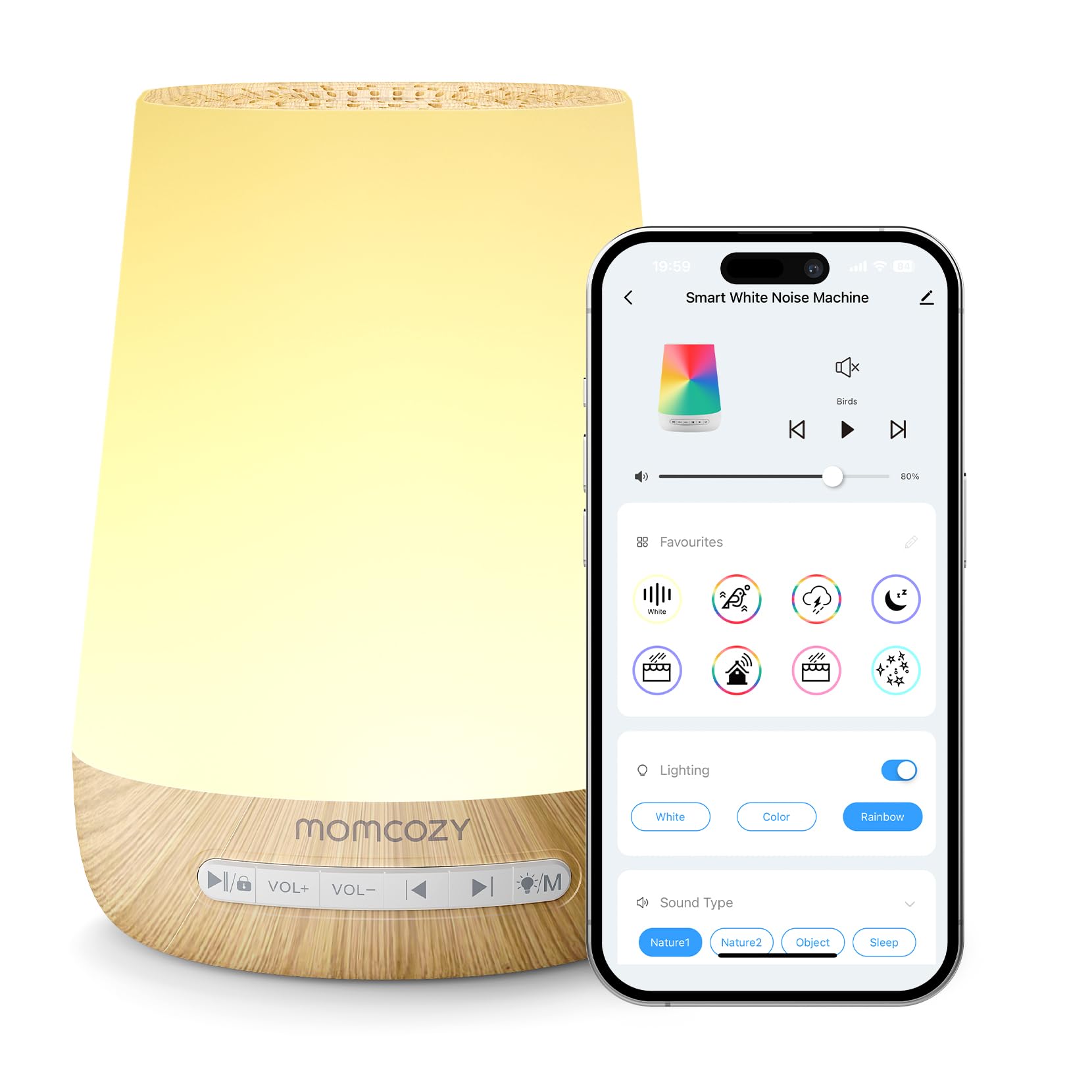
The Momcozy Smart Baby White Noise Sound Machine with App Control & Night Light brings app-based control that lets you create automated schedules from your phone. With 34 high-fidelity sounds spanning white noise, fan sounds, lullabies, and nature tracks, you can set specific sound profiles to turn on and off at precise times. The 7-color night light adjusts remotely, so you can gradually dim or brighten the room as you shift your baby's schedule forward or backward.
Three to four days before the time change, start moving your baby's sound machine schedule by 15 minutes each day. The app lets you customize volume, brightness, and sound selection for different times of day, syncing with your adjusted routine. Since it requires a 2.4G Wi-Fi connection and must stay plugged in, you'll have continuous control without worrying about batteries dying mid-transition.
Manual Control With Memory Features
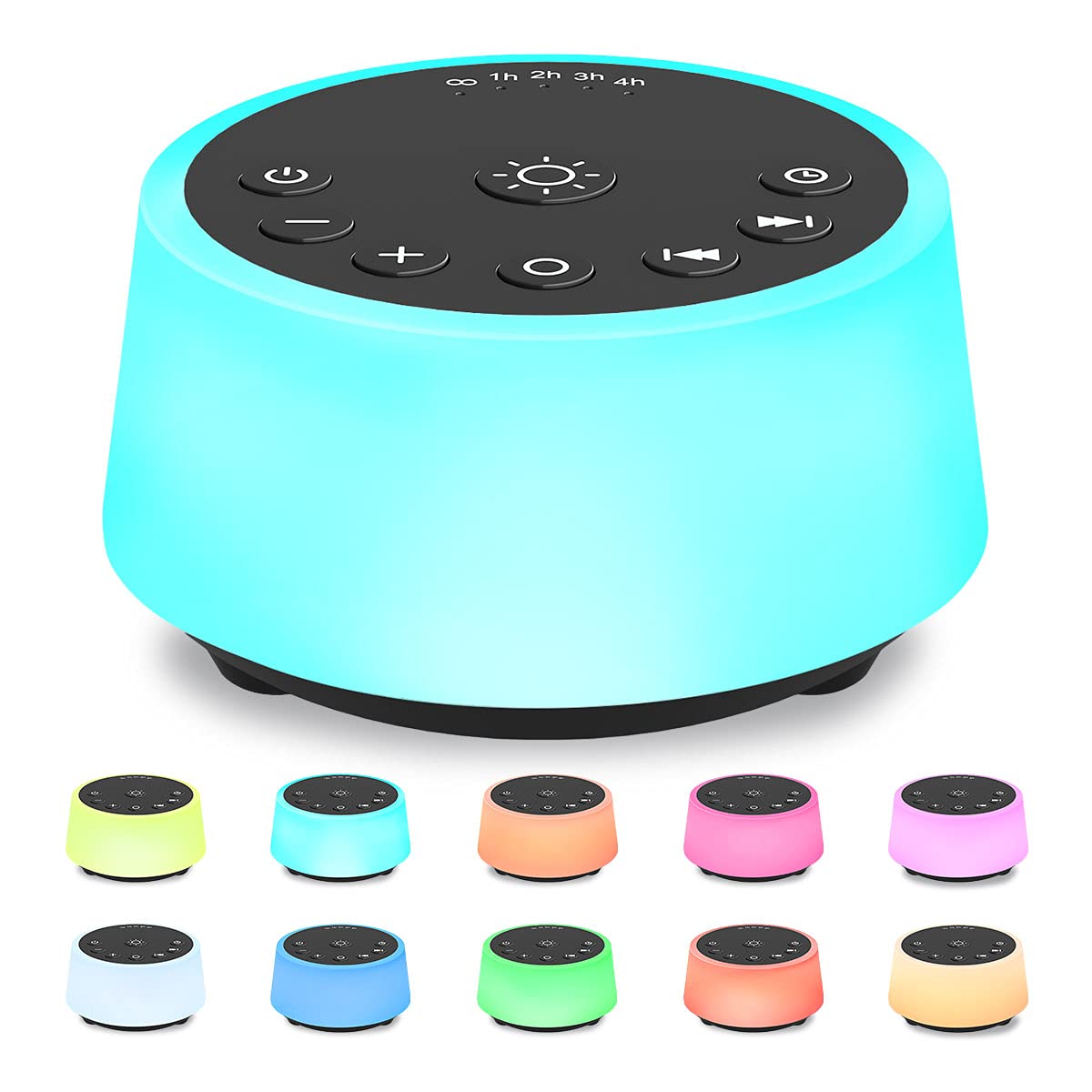
For families who prefer hands-on control without apps, the Color Noise Sound Machines with 10 Colors Night Light 25 Soothing Sounds and Sleep White Noise Machine 32 Volume Levels 5 Timers Adjustable Brightness Memory Function for Adults Kids Baby offers a straightforward button interface with memory function. It remembers your last settings for volume, brightness, track, and timer, so you don't have to reconfigure everything each night during the transition period.
The 10-color ambient lighting and 25 soothing sounds, including white noise, fan sounds, sea waves, and rain, provide variety when you need to experiment with different combinations during schedule shifts. Five timer options from continuous play to four hours give you flexibility as bedtimes temporarily fluctuate. The gradual fade-out feature when the timer ends prevents jarring wake-ups during the adjustment period.
Its compact, lightweight design makes it easy to reposition in the nursery if you need to adjust light placement as natural daylight patterns shift with the season. FCC, CE, and RoHS certification provide safety assurance during round-the-clock use.
Practical Strategies for Time Change Success
- Begin adjustments 3-4 days before the official time change
- Shift sound machine timers by 15-minute increments daily
- Coordinate lighting changes with sound adjustments for consistent cues
- Maintain the same sound profiles your baby already associates with sleep
- Keep daytime routines consistent even as sleep times shift
- Use blackout curtains to control natural light alongside your sound machine's lighting
Who Benefits Most From Programmable Sound Machines
Families with babies under 18 months will see the biggest impact, as this age group struggles most with time changes. Parents managing multiple children with different sleep needs appreciate scheduling features that automate routines. Those who already use sound machines for sleep will find the transition smoother with programmable options, since the familiar sounds remain constant even as timing shifts.
Who Might Skip These Features
If your baby is highly adaptable and adjusts to schedule changes within a day or two, advanced scheduling may be unnecessary. Families who travel frequently might find Wi-Fi-dependent features frustrating when away from home networks. Very young newborns under two months haven't established firm circadian rhythms yet, so simpler sound machines may suffice.
The Bottom Line
Daylight saving time doesn't have to derail your baby's sleep. Sound machines with scheduling capabilities, adjustable lighting, and memory functions provide the tools to ease that transition through gradual, controlled adjustments. Whether you prefer app-based automation or hands-on control with preset memory, these devices transform a potentially stressful week into a manageable shift that respects your baby's developing sleep patterns.
Related Buying Guides
- WONDERKID vs AUSTOR Self-Closing Outlet Covers: Which Slide Mechanism Is Smoother for Daily Use?
- Best Baby Shower Gift: Carrier Bib Sets That New Parents Actually Need
- Backseat Organizer with Tray Table vs. Without: Which Setup Actually Works for Daily School Runs?
- Baby Won't Keep Earmuffs On? Troubleshooting Infant Hearing Protection
- Beginner's Guide to Baby Diaper Cream: What Every New Parent Needs to Know
- How to Build a Budget Travel System with a Car-Seat-Compatible Stroller