How to Keep Your Baby Closet Organized Through Every Size Transition
Baby closets spiral into chaos fast. This maintenance routine keeps every size visible, accessible, and ready for the next growth spurt.
Why Baby Closets Need a Maintenance Routine
Babies outgrow clothes in weeks, not years. Hand-me-downs arrive in batches. Shower gifts come in sizes you won't need for months. Without a system, your nursery closet becomes a jumbled pile where nothing fits and nothing is findable.
The fix isn't a one-time overhaul. It's a lightweight maintenance routine you repeat at every size transition — and it starts with the right dividers.
The Core Tool: Size Dividers That Grow With Your Baby
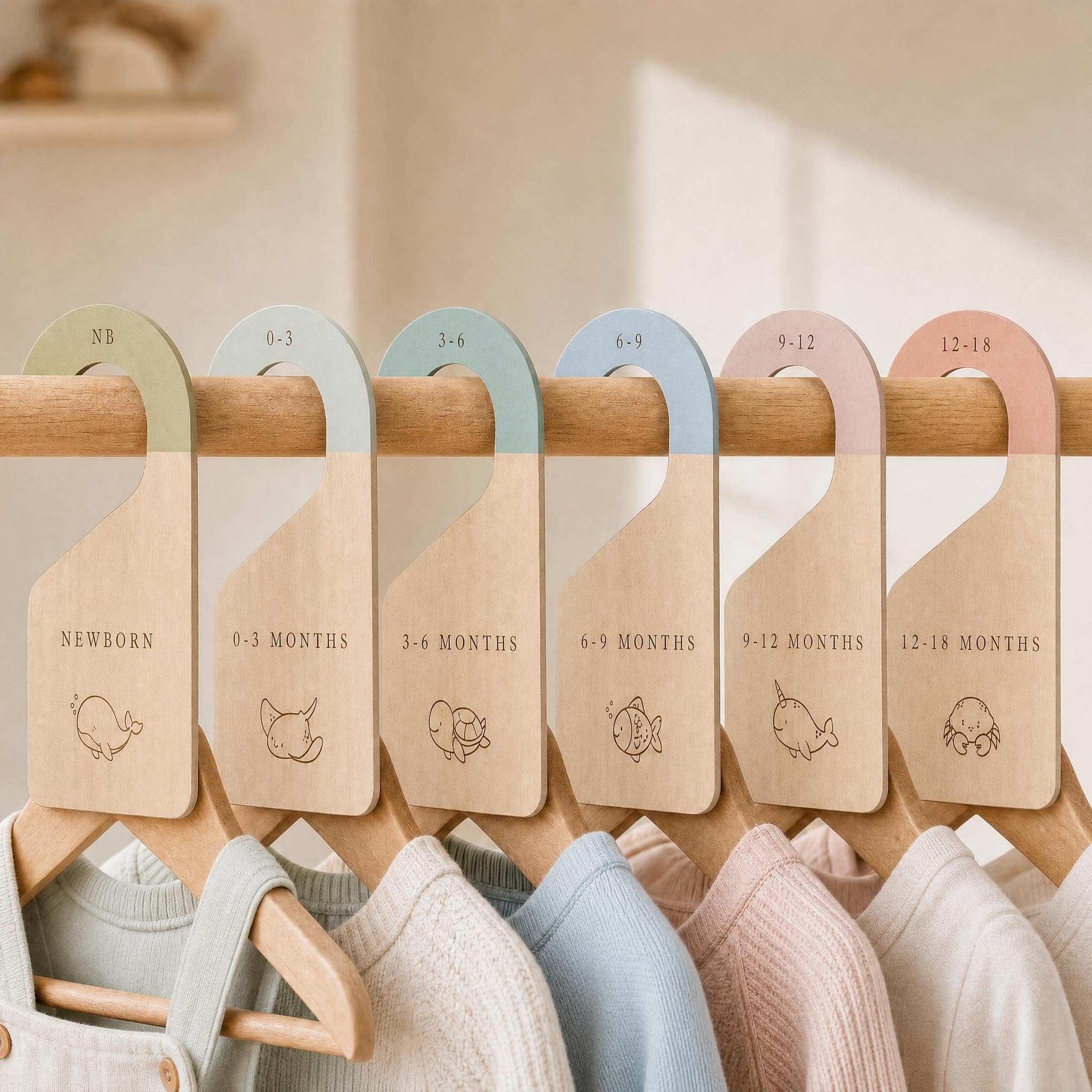
A set of labeled dividers turns a chaotic rod into a filing system. The Beautiful Wooden Baby Closet Dividers Set of 7 - Double-Sided Organizer for Newborn to 24 Months Size Clothes - Adorable Nursery Decor Hanger Dividers Easily Organize Your Little Girls or Boys Room by KIBAGA covers every standard increment from newborn through 24 months. Each 7×3.5-inch divider is double-sided, so you can read the size label whether you open the closet from the left or the right — a small detail that saves real time during 3 a.m. changes.
Because they're made of smooth, chip-resistant wood, they won't snag delicate fabrics the way rough plastic edges can. The gender-neutral design works for any nursery palette.
Your Size-Transition Maintenance Checklist
Run through these steps each time your baby moves up a size:
- Pull the outgrown section. Remove everything behind the current size divider. Bag donations, store keepsakes, and set aside hand-me-downs for the next child.
- Shift the divider forward. Move the size label so the next increment sits at the front of the rod. With the KIBAGA set's seven dividers, the next size is already labeled and waiting.
- Wash and hang the next size up. Pull stored clothing from bins, run it through a gentle wash, and hang it behind the correct divider.
- Spot-check fit weekly. Babies grow in spurts. A quick check each weekend catches the moment a onesie starts riding up before you're caught with nothing that fits.
- Purge extras per section. If one size has more than 12 everyday outfits, trim it down. Less inventory means faster dressing and less visual clutter.
Seasonal Overlap: Handling Two Sizes at Once
Size transitions rarely line up with weather changes. Your baby may hit 6–9 months in late fall, meaning you need both warmer layers from the current size and lighter pieces in the next. Keep both sections active on the rod and use the double-sided labels as visual anchors — one glance tells you exactly where each category starts.
Caring for the Dividers Themselves
Wooden dividers need almost no upkeep, but a few habits keep them looking fresh:
| Task | Frequency | How |
|---|---|---|
| Dust removal | Monthly | Dry microfiber cloth |
| Spot clean | As needed | Damp cloth, dry immediately |
| Inspect for chips | Every size transition | Run fingers along edges; sand lightly if needed |
Verdict
A baby closet stays organized only if you maintain it. The Beautiful Wooden Baby Closet Dividers Set of 7 - Double-Sided Organizer for Newborn to 24 Months Size Clothes - Adorable Nursery Decor Hanger Dividers Easily Organize Your Little Girls or Boys Room gives you the structure — labeled, double-sided, snag-free wooden dividers that cover the full newborn-to-toddler range at a budget-friendly price. The maintenance routine above gives you the habit. Together, they eliminate the daily frustration of digging through mixed-size piles.
Who It Suits
Parents building a nursery from scratch, families with hand-me-down inventories spanning multiple sizes, and anyone gifting a practical baby shower present that actually gets used daily.
Who Should Skip It
Parents who store all baby clothes in folded drawers rather than on hangers — dividers only work on a closet rod.
Related Buying Guides
- WONDERKID vs AUSTOR Self-Closing Outlet Covers: Which Slide Mechanism Is Smoother for Daily Use?
- Best Baby Shower Gift: Carrier Bib Sets That New Parents Actually Need
- Backseat Organizer with Tray Table vs. Without: Which Setup Actually Works for Daily School Runs?
- Baby Won't Keep Earmuffs On? Troubleshooting Infant Hearing Protection
- Beginner's Guide to Baby Diaper Cream: What Every New Parent Needs to Know
- How to Build a Budget Travel System with a Car-Seat-Compatible Stroller